Remember this about Marfa: it’s really a weekend place. Even the stores post signs that they are only open Thursday, Friday Saturday or something like that. We were happy to have seen it, but everyone kept telling us to come back on a weekend. Of course, we had NPR for a bit as we departed Marfa!
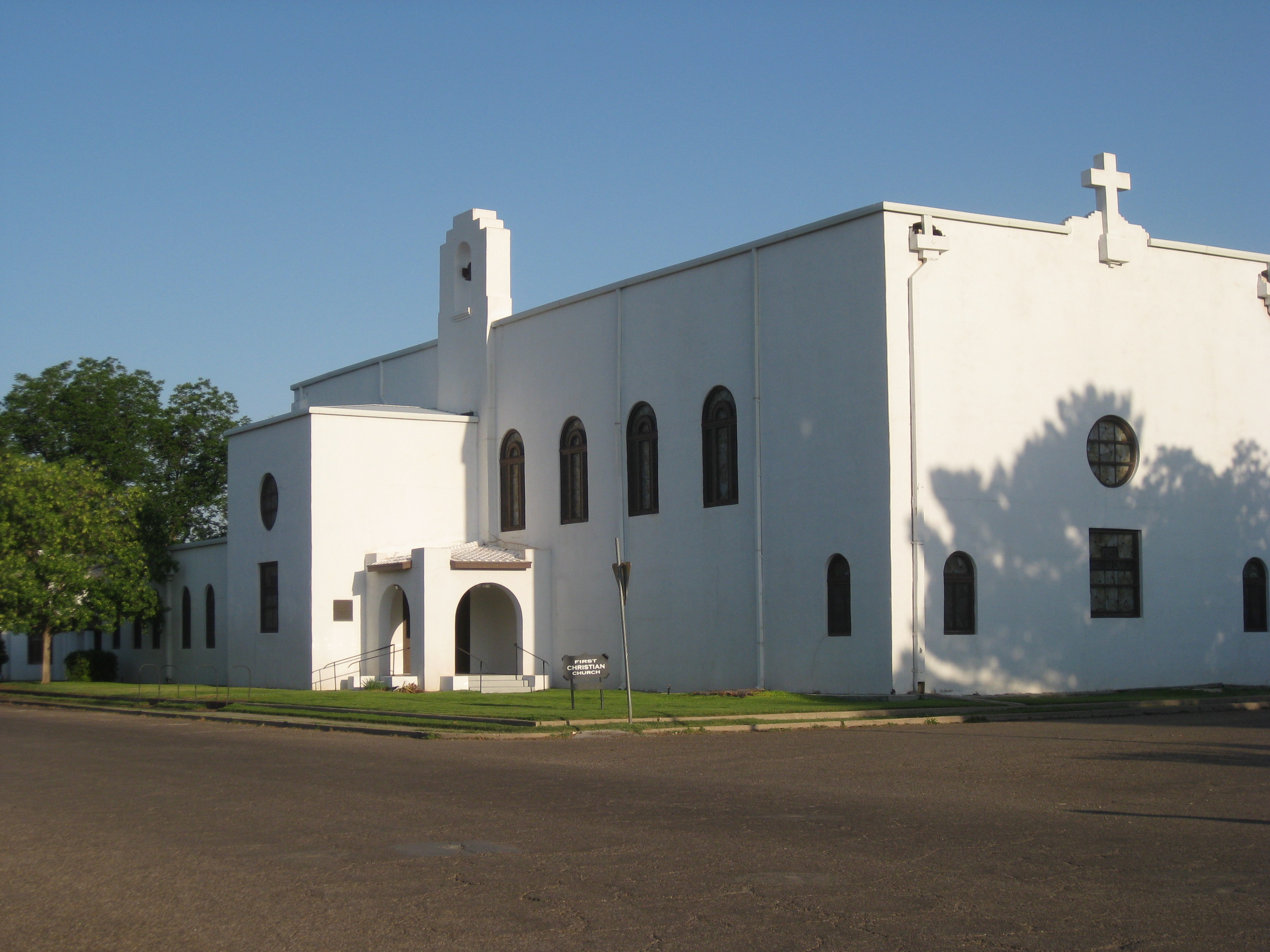
Marfa Church
We were up and out early, waiting for the only breakfast place to open at 8. I was pretty excited to be able to have oatmeal, even if it was instant, and Rick took in one of their waffles with fruit and a French Press Espresso served in an orange Bodum cup. Then we headed out again on Route 10 to El Paso. El Paso is an interesting place – with a population of over half a million, the 19th largest city in the US, and absolutely connected to its sister city, Juarez, Mexico. The El Paso metro area has a population of 2 million and it sprawls! We stopped at H&H Car Wash for lunch and had a fun chat with the owner’s brother, then hopped immediately back onto I-10, out of Texas and into New Mexico. We basically cut through the southwest section of New Mexico in about two and a half hours, with a Starbucks stop in Las Cruces. Other than the coffee it was all desert. Nothing much to report. It was all Christian radio and some stations in Spanish.
It was a 2 time zone afternoon. After three days in Texas in the Central Daylight Time zone we entered Mountain Daylight time just before El Paso in extreme western Texas. As you may know the great state of Arizona doesn’t want to ever change their clocks – they stay on Mountain Standard time and let everyone else figure out what time it is there on any given date. At this time of year Mountain Standard is the same as Pacific Daylight, so we gained another hour as we crossed the NM/AZ line a few hours later.
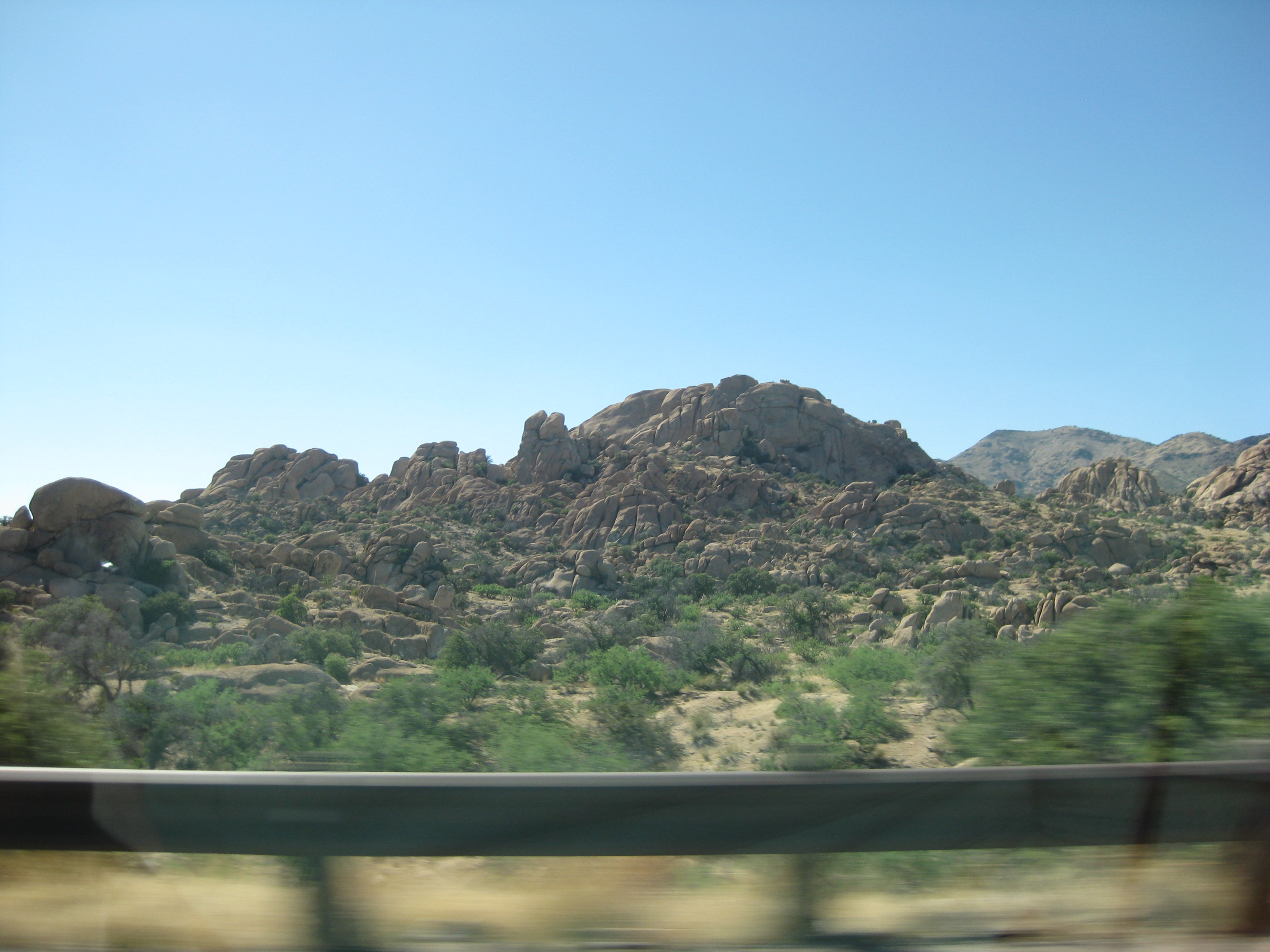
Tucson Mountain Chaos
We were curious as we approached Tucson about the unusual mountain shapes and giant fields of giant boulders that appear to have been strewn by the gods. The name for it is actually “The Tucson Mountain Chaos”. Rick consulted the internet gods and we learned that 70 million years ago a volcano formed where the Santa Catalina Mountains are. The volcano eventually collapsed in on itself, forming a caldera (a circular basin). Then about 30 million years ago crustal stretching, a result of plate tectonics, caused the upper part of the caldera to slide 20 miles off the lower part. The area where Tucson sits dropped 10,000 feet to form a valley, which has since filled in with 5,000 feet of sediment. The upper caldera became the Tucson Mountains, the lower caldera the Santa Catalina Mountains. Phew! Nothing like that happened in New England, we let the glaciers do all the work!
After Tucson it was a few more hours to Phoenix where we checked into the Marriott Buttes. I’d stayed here before for a Sage meeting. Now that the daytime temperatures in Phoenix regularly pass over 100 degrees things have quieted down and the hotel appears to have only one small conference going on. We had the pool to ourselves, then drove to Pizzaria Bianco for dinner. Rick will report later today on yesterday’s two dining stops – both James Beard Award winners.
On to LA on Wednesday AM. Almost at our destination!
Hi Rick and Joan…
Wow…can’t believe you’re almost there! Whatcha gonna do for an encore…your followers will want more.